
When developing sports footwear, choosing the right EVA material is essential for achieving the
correct balance between cushioning, weight and durability.
EVA midsole hardness is one of the most important specifications during sole development.
However, hardness alone does not determine the final performance of a shoe.
Factors such as EVA density, foam structure, sole design and footwear application all influence how
the finished sole performs.
EVA Hardness Testing in Sole Development
EVA foam hardness is commonly measured using a C-type durometer.
The tester applies controlled pressure to the EVA surface and measures the material’s resistance toindentation. A lower reading generally indicates a softer EVA material, while a higher readingindicates a firmer material.
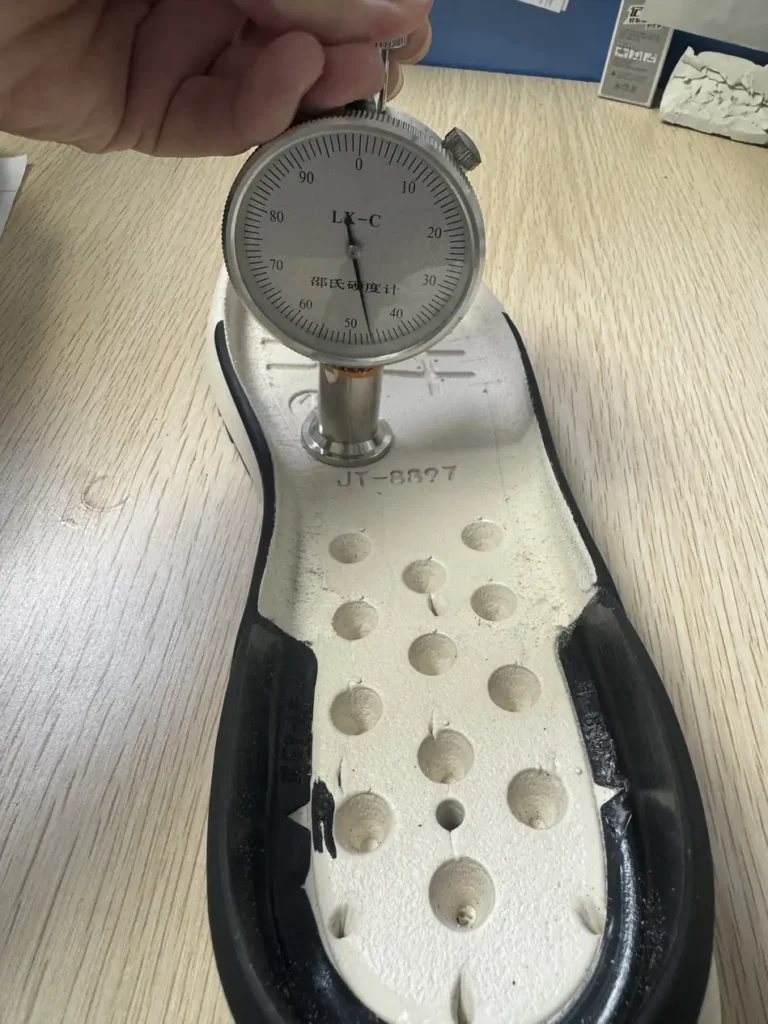
This measurement helps us evaluate material consistency between samples and production batches.
For footwear brands, a reliable EVA specification is important because even small material
differences can affect the final shoe feeling, weight and performance.
However, EVA hardness should always be evaluated together with the complete sole construction
and intended application.
EVA Hardness vs EVA Density: What Is the Difference?
A common misunderstanding in footwear development is treating EVA hardness and EVA density as
the same property.
They are different.
Hardness measures how strongly the EVA surface resists pressure.
Density refers to the amount of material within a specific volume.
Two EVA materials may have similar hardness values but different cushioning response, weight and
durability.
When developing a custom EVA sole, professional manufacturers consider multiple factors,
including:EVA hardnessEVA densityfoam structuresole thicknesscompression performancefinal footwear application
The goal is not simply to choose a softer or harder EVA.
The goal is to create the right material balance for the specific shoe design
Why EVA + Rubber Sole Construction Is Popular
Many sports footwear brands choose an EVA + rubber sole construction because these two
materials provide different advantages.
EVA is mainly used for:
Lightweight cushioningShock absorption
Comfortable underfoot feeling
Traction
Rubber is mainly used for:
Abrasion resistance
Ground contact protection
By combining EVA and rubber, a sports shoe sole can achieve a better balance between comfort
durability and performance.
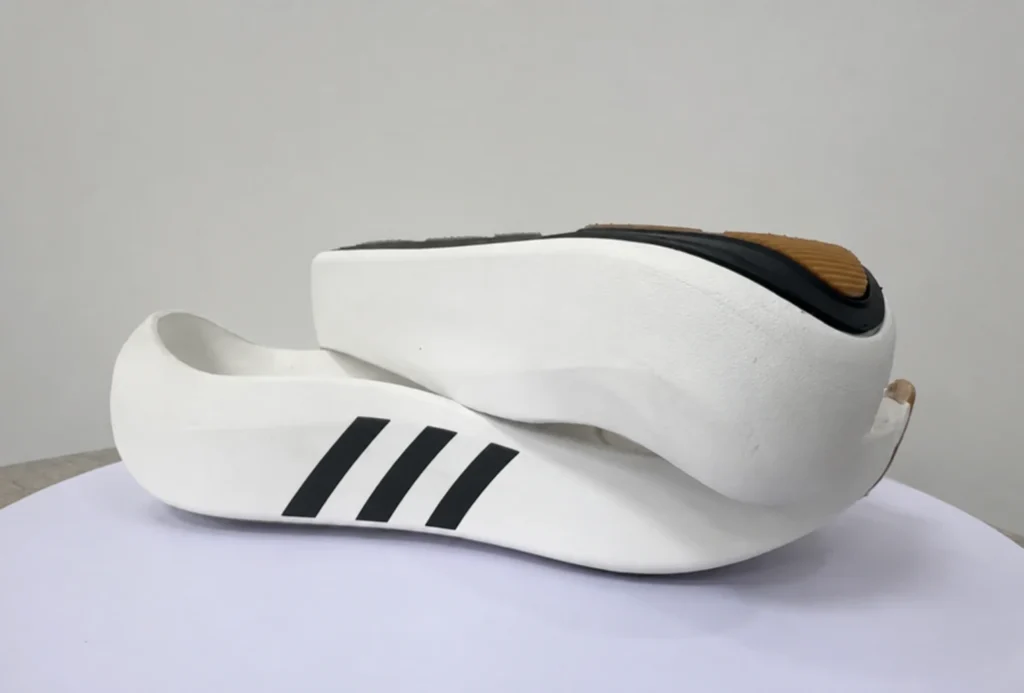
At Tread Soles, we develop EVA and rubber outsole solutions for different sports footwear
applications, including turf football shoes, training shoes and customized sports soles
Through adjusting EVA hardness, density, rubber coverage and outsole patterns, we help brands
achieve the right combination of:
Comfort + Weight + Traction + Durability
Choosing the Right EVA Sole Manufacturer
For footwear brands, selecting an EVA sole manufacturer is not only about getting a specific
hardness number.
A reliable supplier should understand:
Material performance
Sole structure design
Production consistency
Final footwear requirements
Before starting a new EVA sole project, brands should consider:
Footwear application
Target cushioning level
EVA hardness range
Sole construction
Production requirements
Clear specifications help reduce development issues and ensure better consistency during mass
production.
Custom EVA Sole Development by Tread Soles
EVA hardness is an important part of sports shoe sole development but it is only one element of
the complete solution.
At Tread Soles, we provide custom sole development services including:
EVA midsolesEVA + rubber outsolesTF football shoe solesCustomized outsole designsOEM and ODM production
Our goal is to help footwear brands create soles with the right balance of performance, durability
and production reliability.
If you are developing a new sports footwear project and looking for a reliable EVA sole
manufacturer, contact Tread Soles to discuss your requirements.
Contact Tread Soles for custom EVA and rubber sole solutions.