
A boxing shoe outsole needs enough grip for fast footwork, but it should not prevent the athlete from pivoting. Getting this balance right starts before the first sample is made.
For footwear brands and sourcing teams, the following details should be confirmed with the outsole manufacturer early in the development process.
Split Sole or Full Rubber?
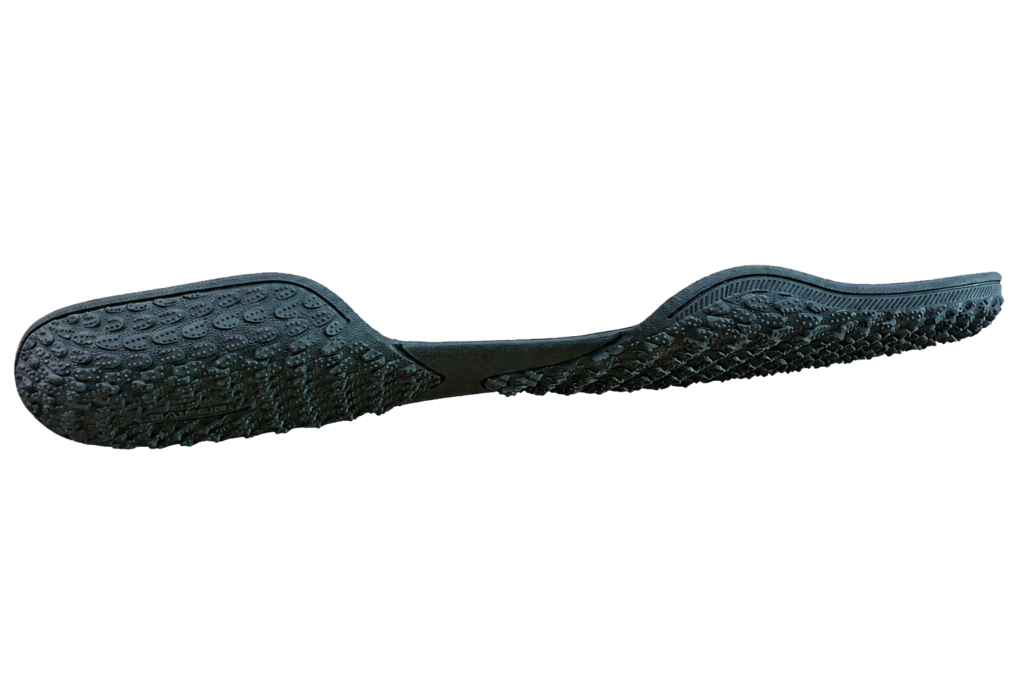
A split sole allows more forefoot flexibility and helps the shoe feel closer to the floor. It is often used for lightweight boxing and wrestling footwear.
A full-rubber outsole creates a more continuous base. This construction may be more suitable when the shoe requires additional stability, durability or simpler assembly.
The final choice should match the upper construction, target shoe weight and intended retail market.
Tread Pattern and Grip
Boxing footwear does not need the deep lugs found on outdoor shoes. What matters more is where the grip is placed.
Circular tread zones can support pivoting, while fine ribs provide directional traction. Smoother transition areas may help prevent the outsole from catching during quick changes of direction.
The forefoot, heel and medial edge should be reviewed separately instead of applying the same tread across the entire outsole.
Details Needed Before Sampling
A useful development brief should include:
- Outsole drawing or reference sample
- Required size range
- Split-sole or full-rubber construction
- Preferred material and hardness
- Color and logo requirements
- Estimated order quantity
- Target shoe weight
Providing the upper drawing or last dimensions also helps the supplier check the bonding edge, toe shape and heel fit before tooling begins.
TreadSoles manufactures custom boxing and wrestling shoe soles for footwear brands and shoe factories. Available options include custom tread patterns, molded logos, colors, hardness levels, size ranges and outsole constructions.
If you are developing a new boxing shoe, send us your drawing, size range and expected order quantity. We can review the project and recommend a suitable outsole solution before sampling.